
BNG Survey in Beccles
Enquire Today For A Free No Obligation Quote
At BNG Survey, we help developers, planners, and landowners in Beccles and across the UK meet the growing environmental requirements for sustainable development.
With the UK Environment Act now mandating measurable biodiversity improvements, our experienced ecologists ensure your BNG Survey identifies the necessary actions to achieve at least a 10% gain while meeting local planning authority standards.
From baseline data collection to targeted habitat recommendations, we provide a balanced, development-friendly approach that keeps projects compliant while supporting environmental enhancement.
Why Is a BNG Survey Important for Developments in Beccles?
A BNG survey in Beccles is a detailed ecological assessment that measures the current biodiversity value of a site and identifies opportunities to leave it in a measurably better condition after development.
This process is a legal requirement for most planning applications, ensuring developments actively contribute to habitat restoration, species protection, and long-term ecological resilience.
Which Types of Projects Across Beccles Require a BNG Survey?
BNG survey requirements in Beccles apply to a wide range of developments, including:
- Residential developments – From small housing schemes to large estates, particularly on greenfield or sensitive ecological sites.
- Commercial builds – Offices, retail premises, warehouses, and mixed-use developments.
- Infrastructure projects – Roads, railways, bridges, and utilities that impact habitats or wildlife corridors.
- Major refurbishments – Large-scale redevelopments with significant ecological implications.
- Agricultural projects – Land-use changes, new farm infrastructure, and drainage alterations.
- Renewable energy installations – Solar farms, wind farms, and related works.
- Industrial expansions – Facility construction or site enlargements in ecologically sensitive areas.
How Much Does a BNG Survey Cost in or Around Beccles?
The cost of a BNG survey in Beccles ranges from £5,000 to over £50,000, depending on the site’s existing biodiversity, the complexity of required enhancements, and whether actions are delivered on-site or off-site.
Factors affecting costs include habitat creation or restoration requirements, landscaping complexity, specialist monitoring needs, and long-term management commitments.
Contact BNG Survey in Suffolk to get a tailored quotation for your project.
How Do Ecologists in Beccles Conduct a BNG Survey?
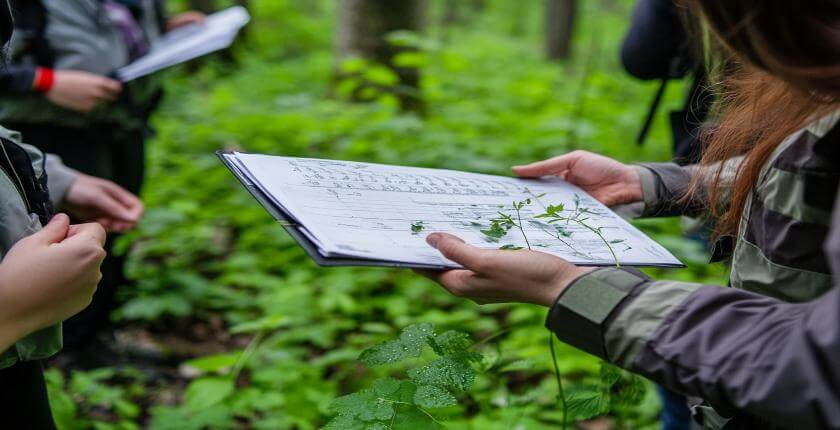
Our ecologists in Beccles use the DEFRA Biodiversity Metric to carry out a BNG survey. This includes mapping habitats, assessing condition and distinctiveness, and recording associated species.
Each habitat type receives a biodiversity unit score based on its size, quality, and rarity. This baseline score is then used to calculate the biodiversity uplift needed to meet planning requirements.
Can BNG Survey Recommendations Include Both On-Site and Off-Site Measures?
A BNG survey in Beccles can identify measures that are delivered entirely on-site or combined with off-site biodiversity units to achieve compliance.
Hybrid approaches are often used when space or design limitations make it difficult to meet biodiversity targets within the development site alone.
How Do BNG Survey Reports in Beccles Meet Local Planning Authority Standards?
We prepare BNG survey reports in Beccles to meet both DEFRA guidelines and local planning authority criteria. This includes accurate habitat maps, biodiversity metric calculations, and detailed management schedules.
By aligning survey recommendations with local ecological priorities, such as enhancing wildlife corridors or restoring priority habitats, we help secure smoother planning approvals.
What’s the Process for Completing and Submitting a BNG Survey in Beccles?
The BNG survey process begins with an initial consultation to understand the development scope and site characteristics in Beccles. Our team then conducts the survey, calculates the biodiversity units, and proposes enhancement measures.
We compile all required documentation, including metric results and implementation plans, for submission with the planning application, ensuring the survey fully addresses statutory and practical requirements.
What Strategies Are Used to Achieve the 10% Biodiversity Requirement Identified in a BNG Survey?
Typical strategies identified through a BNG survey in Beccles include:
- Enhancing existing habitats – Improved management of grassland, woodland, and wetland areas.
- Creating new habitats – Establishing wildflower meadows, ponds, wetlands, or native woodland.
- Green infrastructure – Adding green roofs, living walls, and urban planting.
- Wildlife corridors – Connecting fragmented habitats to encourage species movement.
- Sustainable drainage systems (SuDS) – Integrating water management with ecological enhancement.
- Invasive species removal – Eradicating non-native species to restore natural habitats.
Do BNG Survey Specialists in Beccles Provide Ongoing Monitoring and Reporting?
Following the completion of BNG survey measures, ongoing monitoring in Beccles is essential to verify that biodiversity targets are achieved and maintained, typically for a minimum of 30 years under the Environment Act.
We provide scheduled inspections, compliance reporting, and habitat condition checks to ensure gains remain on track.
Contact BNG Survey for expert support in delivering and maintaining biodiversity improvements.
Find More Info
Make sure you contact us today for a number of great BNG survey services in Beccles.
For more information on BNG survey in Beccles NR34 9, fill in the contact form below to receive a free quote today.
★★★★★
“We needed a BNG Survey as part of our planning application, and the team delivered a thorough and well-structured report. Everything was explained clearly, and they even highlighted opportunities we hadn’t considered to enhance biodiversity.“
Jonathan Edwards
Suffolk
★★★★★
“The BNG Survey was carried out with impressive attention to detail. The report not only met all planning requirements but also gave us clear recommendations on how to improve biodiversity on site.”
Daniel Fletcher
Suffolk